Galaxy S26 or iPhone 17? (2026)
Deciding between an iPhone or a Samsung is a notoriously contentious issue, but what really separates Apple from Android?
Although we go into more detail in our dedicated Android vs iOS guide, we’ve also compared Apple and Samsung’s different offerings.
Read on to learn more about what really separates an iPhone from a Samsung Galaxy – specifically we’ll be looking at the iPhone 17 and Samsung Galaxy S26 series.
Otherwise, make sure you visit our best smartphones round-up.
Pricing
The cheapest iPhone is the iPhone 17e which has a starting price of £599/$599 and is readily available from both Apple’s site and from third-party retailers.
Otherwise, the iPhone collection is pointed more towards premium devices, with the entry-level iPhone 17 starting at £799/$799 while the most expensive iPhone 17 Pro Max will set you back from £1199/$1199.
SQUIRREL_PLAYLIST_10208243
Samsung’s devices, on the other hand, span the entire smartphone market, from budget-friendly choices like the £199/$199 Samsung Galaxy A17 to mid-range options such as the £529/$549.99 Galaxy A57. Then Samsung has its flagships which include the Galaxy S26 for £879/$899 and the top-end Galaxy S26 Ultra which starts from £1279/$1299.
In addition, Samsung even produces its own line of foldables, starting at £1049/$1099 for the Galaxy Z Flip 8, something that Apple doesn’t offer – yet, anyway. (For more on what we know about this, check out our iPhone Fold rumours guide).
SQUIRREL_PLAYLIST_10208704
Design and build
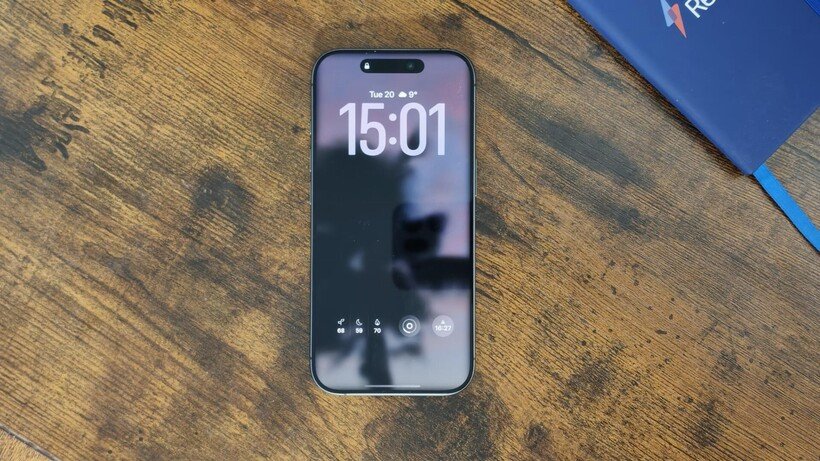
The design of the iPhone has been pretty consistent since the launch of the iPhone 12 line back in 2020, with all subsequent iPhones sporting the flat-edged, rounded corner design that has all but been copied by much of the Android competition in the years since.

There are a few differences depending on the phone you go for though. The iPhone 17 looks pretty much the same as any entry-level iPhone for the past few years, along with the iPhone 17e – though that only has the single rear camera. The iPhone Air is Apple’s ultra-thin phone and measures in at just 5.6mm thick and 165g, but you’ll face compromises in battery life and cameras compared to other models.

However, the iPhone 17 Pro range looks a little bit different to other iPhones, featuring a unique two-tone rear panel that’s made of both aluminium and glass, and it sports an iPhone Air-like camera island too.

Samsung’s smartphone design varies quite widely, depending on the price point in question. If you go for entry-level devices, you’ll likely get a mainly plastic phone, with the company only using more premium materials like aluminium and glass on its mid-range and premium devices. That said, the most recent Galaxy S smartphones look a lot like Apple’s alternatives, with a similar flat-edged, rounded-corner design, and available in small and large options.

Where Samsung differs from Apple is by also offering foldable smartphones, both as a nostalgic flip phone with the Z Flip 8 and two more modern book-style foldables: the Galaxy Z Fold 8 and Galaxy Z Fold 8 Ultra. In fact, Samsung has even further refined its book-style foldable with the Z Fold 8, and introduced a boxier design.
Samsung Galaxy Z Flip 8
Samsung Galaxy Z Fold 8
For more on this, and how it differs from the Ultra, visit our Samsung Galaxy Z Fold 8 vs Galaxy Z Fold 8 Ultra guide.
Screen
When it comes to Apple’s screen tech, things are finally beginning to look a little more consistent. For years, Apple’s top-end ProMotion display tech was exclusive to its Pro models, but with the iPhone 17 range, it’s present on all models – including both the base model and the iPhone Air – bringing with it an LTPO-enabled 120Hz refresh rate.
All iPhones, except for the iPhone 17e which still offers a slower 60Hz refresh rate.

That said, aside from refresh rates and slightly varying levels of brightness, all iPhones offer the same high-end OLED screen. The iPhone 17 has the smallest screen at 6.3 inches, with the iPhone 17 Pro Max topping out with a 6.9-inch panel.
With smartphones available at varying price points, the screen experience for Samsung devices isn’t quite as consistent.
At the top end of the market, you’re getting Samsung’s 120Hz LTPO-enabled Dynamic AMOLED 2X screen tech, present on its flagship Galaxy S and foldable ranges. Screen sizes also range from small options like the 6.3-inch Galaxy S26 to the eight-inch inner panel of the Galaxy Z Fold 8 Ultra. Having said that, Samsung has introduced its new Privacy Display technology within the Galaxy S26 Ultra, which hides either your entire screen or just notifications unless viewed face-on.
Privacy Display off
Privacy Display on
However, as phones get cheaper, the screen tech gets a little more basic.
Mid-rangers like the Galaxy A57 still offer a bright, detailed 6.7-inch AMOLED screen, but you lose out on the adaptive refresh rate and other premium gubbins. That said, you’re pretty much guaranteed an AMOLED panel at any price, featured even on the entry-level Galaxy A17.
Cameras
Apple’s camera performance is, for the most part, pretty consistent across its collection. Regardless of whether you go for the iPhone 17e or iPhone 17 Pro Max, you’ll be getting the same 48MP main camera capable of great snaps in both well-lit and low-light conditions. Instead, the difference lies in the accompanying lenses.

The iPhone Air is the most lacklustre of the collection, sporting just a single 48MP main camera, while the iPhone 17 adds a matching 48MP ultrawide lens. It’s only when you go to the Pro-level iPhones that you get a dedicated zoom lens, sporting a 48MP 4x periscope lens with 8x in-sensor zoom.
As you might guess, Samsung’s camera offering varies quite a lot more with multiple devices at multiple price points.
As a rule of thumb, the Galaxy S collection offers the most capable cameras around, and the Ultra in particular. The S26 Ultra, for example, sports not only a higher-res 200MP main compared to the rest of the S26 collection, but an ultrawide and not one but two zoom lenses for impressive versatility.

However, as you slide down to the cheaper phones in Samsung’s collection, you’ll begin to see smaller megapixel counts with smaller sensors and narrower apertures. The Galaxy A57 is pretty solid for a mid-ranger with its combination of 50MP main, 12MP ultrawide and 5MP macro lenses, but you won’t get the same level of quality from the entry-level A17 and its 50MP, 5MP and 2MP alternatives.
Performance
In case you hadn’t noticed, Apple prefers its products to be consistent, and that extends to performance.
The entire range uses flagship-level chips developed in-house by Apple itself, with the iPhone 17 sporting the A19 while the Pro models sport a slightly more powerful A19 Pro with better GPU performance. The Air is a bit of an outlier here, sporting a Pro chipset, though with the same GPU core setup as the regular A19, so don’t read too much into that.

Even the iPhone 17e sports a slightly undercooked version of A19, with one-less GPU than the entry-level model.
That said, expect solid performance from any iPhone you use, whether you’re simply scrolling through social media or playing games on the go.
Samsung’s Galaxy S range all sports the same top-end Snapdragon 8 Elite Gen 5 for Galaxy, along with the Z Fold 8, offering similar levels to Apple’s flagship iPhones. The Z Flip 8 is a bit of an outlier with the Exynos 2600, though it’s pretty much in-line with Qualcomm’s chipset offering in most regards.

Unlike Apple, however, its cheaper phones rarely get the same top-end performance as its flagship devices. The Galaxy A56, for example, uses the distinctly mid-range Exynos 1680 chipset, while the A17 sports the entry-level Exynos 1330.
With Samsung phones, it’s best to opt for a more premium model if performance is a top priority.
Software, AI and ecosystem
When deciding between Apple and Samsung phones, the main choice comes down to software. Apple’s iPhone collection runs iOS, while Samsung devices run on Android.
There are plenty of differences that come with that decision, of course – Apple’s iOS plays exceptionally well with other Apple devices, while Android offers better customisation – but you’ll likely already prefer one or the other depending on what you’ve used in the past.

The bigger differentiator comes in the AI department, with Samsung’s Galaxy AI – present on its flagship phones – offering a wider range of AI features and better performance than Apple’s competing Apple Intelligence. Both offer the key tenets of the AI experience, from the ability to rewrite texts to removing background distractions in images, but Samsung’s offering generally performs better than Apple’s alternative.
Apple is working on rectifying things, with the long-awaited Siri upgrade coming to take on Google’s capable Gemini alternative sometime in the near future, but if AI is a huge focus, Galaxy AI is the better choice.
Verdict
Apple arguably leads in terms of style, continuing to offer the flat-edged, rounded corner design that’s now prevalent among the competition – including Samsung itself. It also offers a consistent software experience with timely updates and great interoperability with other Apple products, oodles of power and consistently strong camera performance.
That said, Samsung offers a much wider range of phones at a variety of price points, from budget blowers to flagship options and even next-gen foldables, with different products focusing on different areas of the smartphone experience. The book-style Fold 8 and Fold 8 Ultra models, for example, both offer a focus on productivity, while the Galaxy S26 Ultra goes all-in on performance and camera tech.
That said, whether you want an Apple or Samsung phone will mainly come down to personal preference; if you’ve had an iPhone before, you’ll likely want to continue using iOS, and it’s the same with Samsung and its One UI-flavoured version of Android.